
Oddities Collecting for Beginners: What to Look For at Flea Markets
A practical starter guide to collecting oddities from flea markets: what to inspect, how to spot repairs and fakes, what to avoid ethically, and how to keep costs down.
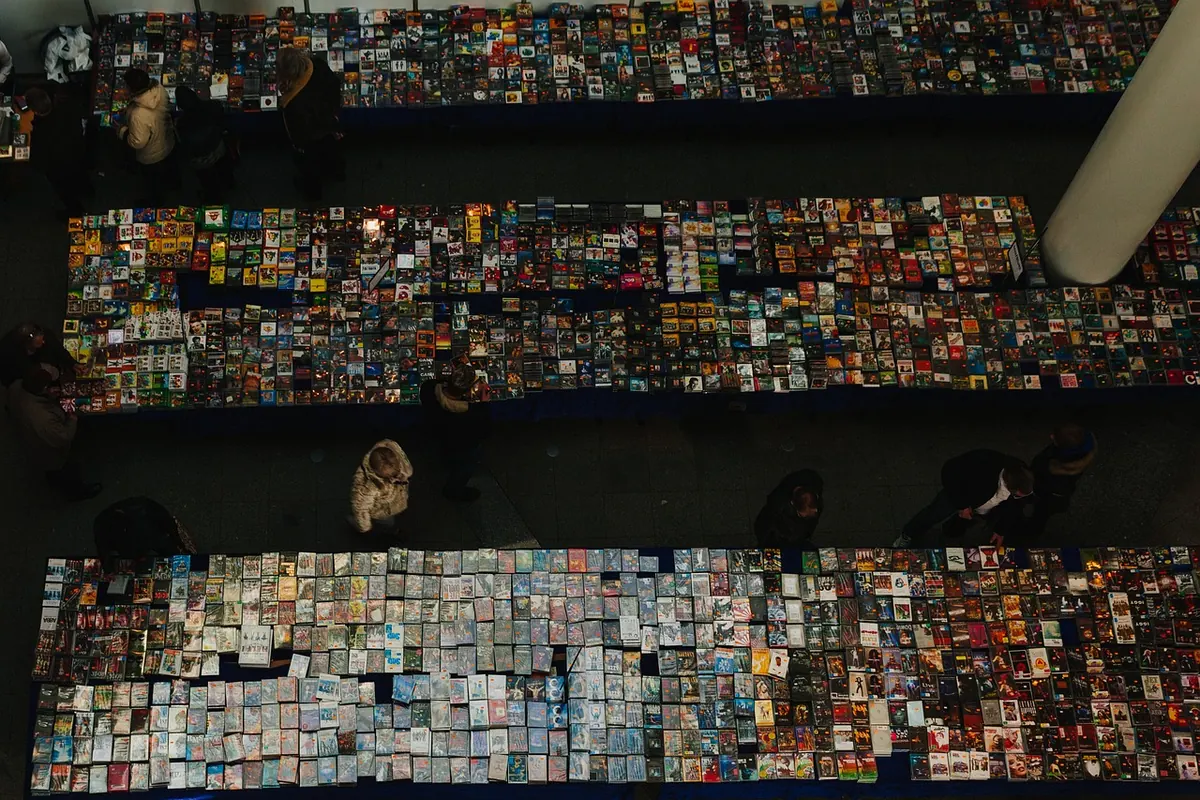
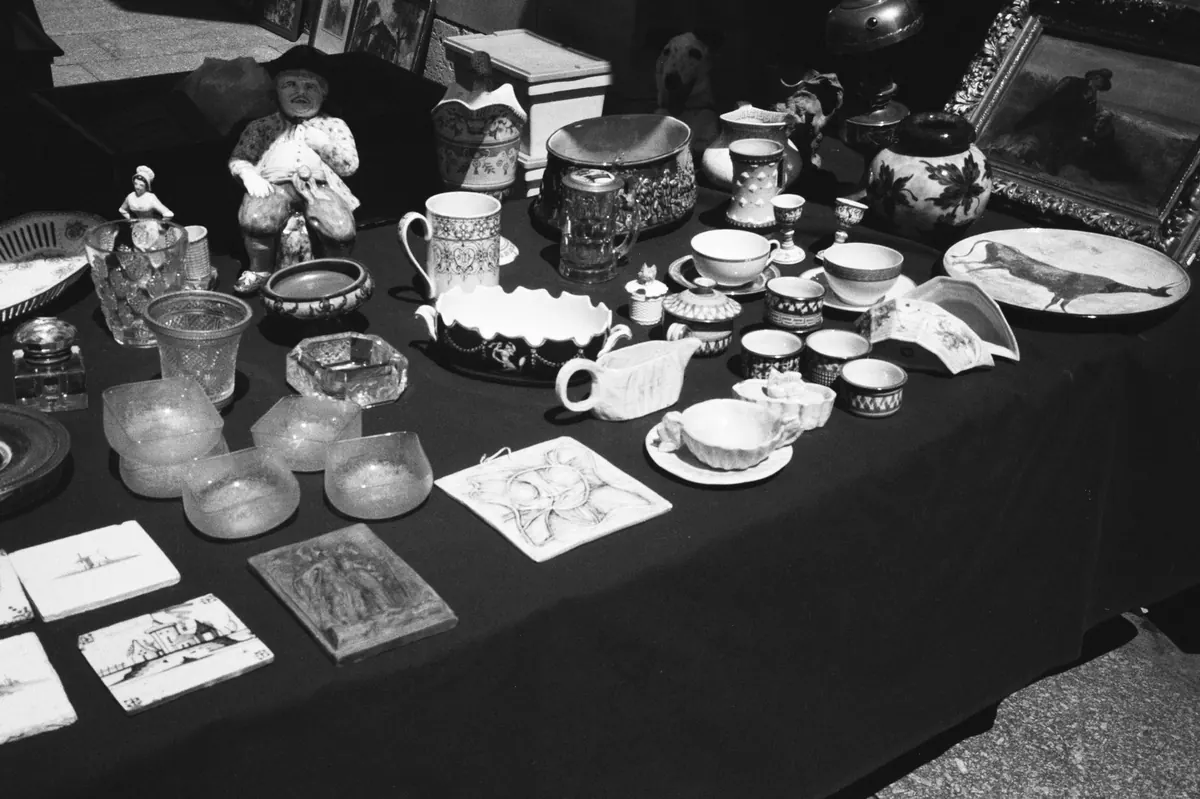
Somewhere between the chipped teacups and the box of cassette tapes, there is usually a stall with a glass case on it. Inside: a brass syringe, three keys with no locks, a pinned beetle missing one leg, a prayer card for a woman who died in 1904. That case is where oddities collecting begins.
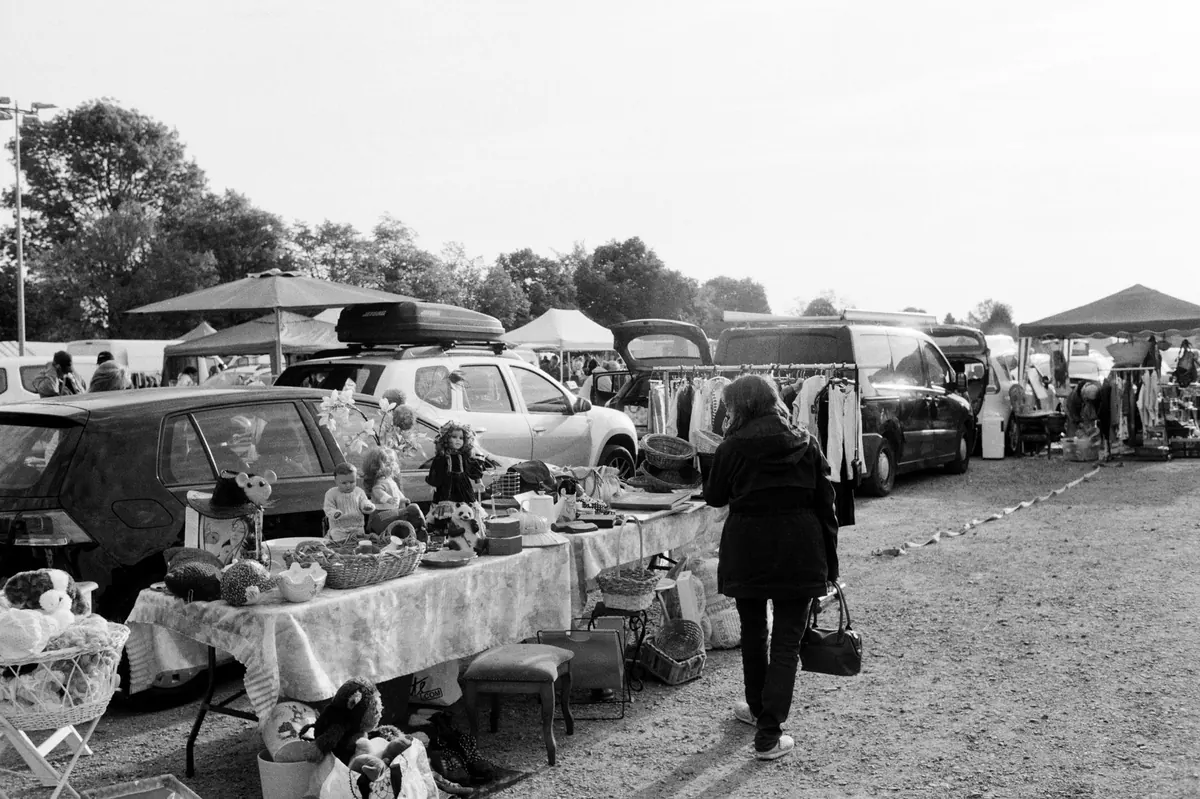
You do not need deep pockets or a curator's training. You need curiosity, patience, and the habit of looking properly before you hand over cash. The best pieces are often cheap precisely because they are strange. Nobody else at the car boot sale wants a hand-labelled poison bottle, so nobody else is bidding against you.
What Counts as an Oddity
The category is elastic, which is part of the fun. An oddity is generally an object that is unusual, slightly unsettling, obsolete, or tied to a trade or belief that has faded. In practice that covers a lot of ground:
- Apothecary and chemist's items: hand-labelled bottles, pill tins, glass measures, ribbed blue poison bottles.
- Mourning objects: jet jewellery, hairwork, memorial cards, mourning brooches.
- Natural history: pinned insects, pressed botanical specimens, labelled shells, geology samples.
- Trade tools: surgical and dental instruments, watchmaker's tools, cobbler's lasts, barber's razors.
- Paper oddities: magic lantern slides, vaccination certificates, quack medicine adverts.
- Folk and devotional pieces: carved figures, pilgrimage badges, wax ex-votos, hand-painted religious plaques.
You will find these things mixed in with ordinary bric-a-brac, usually underpriced, because the seller has no idea what to make of them either. A Victorian ceramic pot with a faded label reading ung. hydrarg. is just an ugly jar to most people.
What ties the category together is not age or rarity but a sense of the specific. A plain white plate tells you nothing. A plate stamped with the name of a hospital that closed in 1952 tells you a great deal.
The Ethical Line: What to Leave on the Table
Collecting well means knowing what to refuse, even when it is cheap and beautiful. A market stall is not a good place to work out the legal details. Dealers are not lawyers, and "everyone sells these" is not a defence.
- Ivory. Dealing in elephant ivory is broadly banned in the UK, with narrow exceptions. Assume you cannot sell it on.
- Protected animal parts. Tortoiseshell, whalebone, certain furs, and taxidermy or mounts of protected species are best avoided. Most British wild bird eggs, and many feathers and bird mounts, are legally protected too.
- Human remains. Teeth, bones, skulls, preserved tissue. Ownership and sale are tightly restricted, and sellers often overstate what is permitted. Leave it.
- Looted or unprovenanced material. Church fittings, gravestone fragments, and loose archaeological finds with no paperwork are a warning sign, not a bargain.
- Hateful material. Wartime items bearing extremist symbols are often legal to own, frequently faked, and will shape how your collection is read.
A simple test: if the seller cannot say where it came from, and the answer amounts to "it came in a box", walk on. If a piece might carry legal implications, take proper advice before you buy rather than afterwards. There will always be another strange object next weekend.
Inspecting a Piece at the Stall
Sixty seconds of inspection will save you more money than any amount of haggling. Ask before picking anything up — glass and ceramics break, and some sellers are rightly protective.
The quick once-over
- Turn it over. Marks, hallmarks, impressed numbers, country of origin and old labels live on the base. A British silver hallmark tells you more than the seller usually can.
- Work every moving part. Open the clasp, swing the hinge, pull the drawer, flex the joint. Stiffness often signals a repair.
- Use raking light. Hold glass and glazed ceramics at an angle to catch hairline cracks, filled chips and over-painting.
- Smell it. Damp, mildew, tobacco, camphor and old perfume all tell you something about how it has been stored.
- Look for insect damage. Fine holes in wood mean woodworm; small bald patches in textiles can mean moth.
- Check the fasteners. Modern screws, especially Phillips-head, suggest a twentieth-century repair or a later addition. Slotted screws, hand-cut threads and irregular hammer marks point the other way.
- Weigh it in your hand. Metal that feels oddly light for its size may be a casting or a resin reproduction.
- Read the label twice. Handwritten labels are part of an object's history, but they are also easy to add. Old ink sinks into paper and fades unevenly; fresh ink sits on the surface.
Red flags that end the conversation
- The seller will not let you handle the piece, or holds it while you look.
- A story that grows more detailed the longer you linger, and never quite adds up.
- An item priced at £3 that becomes £300 the moment you show real interest.
- Fresh grime — dirt applied deliberately to make something look older than it is.
What It Is Worth, and What to Pay
Oddities have no tidy price guide, because the market is thin. Fewer buyers means less competition and lower prices, but it also means resale can be slow. Buy what you like and treat any profit as a bonus.
A few rules of thumb help. Common items in poor condition are worth very little, however old they are. Rarity matters less than condition and completeness — a matched pair of apothecary bottles beats a single cracked one every time.
Do a quick search on your phone before you commit, but be honest about what you are looking at. Asking prices online are not sale prices, and a listing that has sat unsold for two years tells you the real number. Haggling is normal and expected at a flea market; a polite offer, made once and without drama, is usually received well.
Set a ceiling before you go out. Markets are designed to make you spend, and a case full of strange objects is very good at it.
Buy the object that keeps pulling you back to the stall, not the one you talk yourself into on the walk home.
Cleaning and Storing Oddities Without Ruining Them
The most common way beginners destroy a good find is by cleaning it. Enthusiastic polishing removes patina, original finish, labels and handwriting — the very things that give an object its character and its value.
- Do less than you think. Dust with a soft dry brush. That is often the whole job.
- Never polish metal you are unsure about. Patina on brass, copper and bronze is usually desirable. Silver is the exception, and even then aggressive polishing wears away detail.
- Keep paper dry and flat. Store documents, cards and slides in acid-free sleeves, away from damp and direct light.
- Do not wash textiles. Old fabric, hairwork and fragile trim can be ruined by water. Seek advice first.
- Separate the risky items. Anything with mould, active woodworm or rust should be quarantined and treated before it joins the rest of your collection.
Label everything you buy, even roughly. A slip of paper with the date, the market and what the seller told you takes ten seconds and will matter to you in five years — and to whoever inherits the collection in fifty.
Building a Collection With a Point of View
The collectors who enjoy this longest are rarely the ones with the most objects. They are the ones with a thread. Mourning jewellery, quack medicine, surgical tools, post-mortem photography, pinned British beetles, mid-century fairground prizes — any of these gives you a reason to look, a reason to research, and a way to notice what everyone else has walked past.
Choose a thread broad enough to stay interesting but narrow enough to become expert in. Read around it. Join a forum or a local society. Talk to the dealers at stalls you visit regularly — they remember faces, and they will put things aside for a buyer who is genuinely interested rather than merely browsing.
A beginner's market kit
Everything here fits in a coat pocket or a small bag:
- A loupe or small magnifier.
- A soft brush and a microfibre cloth.
- A small torch, for raking light and dark corners.
- Bubble wrap and a few zip bags, so nothing breaks on the way home.
- Cash in small notes, and a firm budget in your head.
Start small, start cheap, and start with something you would happily keep even if you never sold another object again. The brass syringe and the three keyless locks will still be there next month. Your eye is the thing you are really building.
Photo: StockSnap / Pixabay